Curaçao eSIM guide: staying online in Curaçao, Aruba and Bonaire
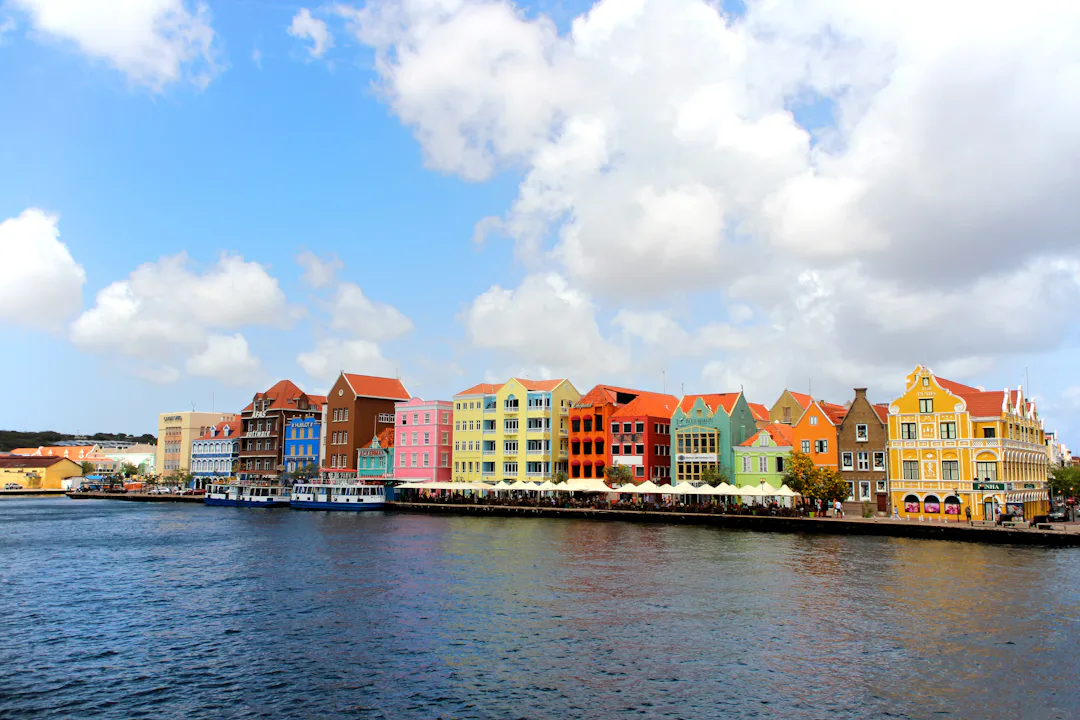
Aruba’s long white beaches, Curaçao’s coves and Willemstad’s waterfront, Bonaire’s reefs: the ABC islands sit just off the coast of South America and draw everyone from cruise passengers to divers who return every year. A Curaçao eSIM, or a plan for Aruba or Bonaire, gives you mobile data from the moment you land, at a final price you see before you go.
This guide explains how roaming works on the islands, which networks each one has, where the signal fades and how to stay connected when you hop between them. You’ll find plans for Curaçao, Aruba and Bonaire in the Visomu app.
Three islands, three separate destinations
All three belong to the Kingdom of the Netherlands, but for your phone they are three different places. Aruba and Curaçao are countries within the Kingdom; Bonaire is a special municipality of the Netherlands, part of what is called the Caribbean Netherlands. Each island has its own telecom market and its own dialling code: +297 for Aruba, +599 9 for Curaçao and +599 7 for Bonaire.
- Aruba: Setar and Digicel. Aruba’s tourism authority says both serve international visitors.
- Curaçao: Flow and Digicel.
- Bonaire: Digicel, Flow and Telbo (Kla), according to the Dutch regulator ACM.
A travel eSIM connects through a local network, and which one depends on the plan. 4G is the norm in the populated parts of all three islands. Setar announced a 5G network for Aruba with Nokia back in 2019, but plan around 4G as a visitor.
Roaming from the US, Canada and the UK
Aruba’s official tourism site notes that the big US carriers work on the island and offer international plans, and warns that roaming can get costly, not least because apps and push notifications use data in the background. Whether you pay a daily fee, pay per megabyte or nothing extra depends on your plan, so look up Aruba, Curaçao and Bonaire one by one on your carrier’s international page before you fly. They don’t always sit in the same rate group.
The same applies to Canadian and UK plans. A UK plan that includes roaming in Europe doesn’t necessarily include the Caribbean, so check your operator’s list of destinations. Our guide to what a week abroad costs with roaming or an eSIM shows how to compare.
Travelling from the EU
EU “roam like at home” doesn’t apply. The islands are overseas countries and territories of the EU: their people are EU citizens, but the islands aren’t part of EU territory. The roaming rules cover the 27 EU countries plus Iceland, Liechtenstein and Norway, and stop there, even on Bonaire.
Where the signal fades
In Oranjestad, Willemstad and Kralendijk, along the hotel strips and the main roads, you can usually expect a signal. The wilder, empty parts are another matter:
- Arikok National Park, Aruba: it covers much of the island’s east, and parts of it can only be reached by 4x4. Expect gaps.
- Christoffel Park and the north coast, Curaçao: rugged and thinly populated, with patchy coverage in places.
- Washington Slagbaai National Park and the east coast, Bonaire: the signal can be weak. Last entry to the park is in the early afternoon, so start early with offline maps and plenty of water.
- Boat trips: on the way to Klein Curaçao or Klein Bonaire the signal comes and goes.
Bonaire is famous for shore diving: you drive the coast road and stop at yellow-painted stones that name each dive site. Mark the sites you want on an offline map before you set off, and tell someone your route when you head into a park.
Wi-Fi on the islands
According to Aruba’s tourism authority, free hotspots are common in hotel lobbies, at the airport, in malls, bars and restaurants, and Setar sells a prepaid Wi-Fi service for hotspots around the island. On Curaçao and Bonaire most hotels, apartments and dive resorts have Wi-Fi too. Speeds vary, and a busy dive resort in the evening, with everyone uploading the day’s footage, can be slow. On the road, at the beach or at a dive site, mobile data is what you’ll use.
Arriving by cruise ship
Aruba and Curaçao are regular cruise stops. At sea, your phone can connect to the ship’s own network, which is billed as roaming and can be expensive. Turn off data roaming on your home line before you sail and use the eSIM once you’re in port. Validity starts when the eSIM first connects on the island, so a plan bought for one port day doesn’t start ticking during the days at sea. If your itinerary calls at both Aruba and Curaçao, make sure you have data for each island.
Choosing a Curaçao eSIM, or one for Aruba or Bonaire
- One island: choose that island’s plan: Curaçao, Aruba or Bonaire.
- Island hopping: a plan for Curaçao doesn’t automatically work on Bonaire or Aruba. Check in the app whether a plan covers every island on your route, or take one per island.
- A trip of a set length: some destinations have day passes, data for the number of days you choose. The app shows whether one is offered for your island.
Where the plan allows it, you can add more data in the app, and it tells you before you buy whether a plan can be topped up. Every price is the final price, VAT included, paid by card or Google Pay.
How much data for a beach, dive or cruise trip?
Snorkelling and diving keep you offline for hours, and a cruise stop is a single day, so many visitors need less than they think. Maps, ride bookings, restaurant reviews and messaging use little. Video calls home and posting reels from the beach use far more, and backing up a camera roll over mobile data can empty a plan in an evening: leave that for hotel Wi-Fi. Check the usage counter in the app after a day; it also tells you when data runs low and when the plan ends soon.
Setting up before you fly
Install the eSIM at home on Wi-Fi a few days before you leave, and keep an eye on the install deadline: the app shows a countdown and sends reminders. Check first that your phone supports eSIM and isn’t carrier-locked, and see our guides for iPhone and Android.
- Install the eSIM and label the line, for example “Aruba”.
- Keep your home SIM as the default line for calls and texts, so verification codes still reach you. If your carrier supports Wi-Fi calling abroad, you can use it on hotel Wi-Fi.
- Turn off data roaming on your home line before departure.
- After landing, switch mobile data to the eSIM, and turn on data roaming for the eSIM line if the app tells you to.
The eSIM is for data only and has no local number. Messaging and calling apps work over its data; see how to keep WhatsApp and your own number.
Island tips
- Dive shops, car rentals and restaurants are often reachable on WhatsApp, which saves you a local number.
- Sun, salt and sand are hard on phones: a waterproof pouch and a power bank earn their place on a boat trip.
- If something isn’t working, use “Mail us” in the app and we’ll reply by e-mail.
Frequently asked
Will my US phone plan work in Aruba and Curaçao?
The major US carriers work on the islands, but roaming costs depend on your plan. Some charge a daily fee, others per use. Look up each island on your carrier’s international page before you fly, and turn off data roaming if you rely on an eSIM.
Does one eSIM cover all three ABC islands?
Not automatically. Aruba, Curaçao and Bonaire are separate destinations with their own networks. Check in the app which countries a plan covers, or take a plan for each island you visit.
Is there signal at Bonaire’s dive sites?
Along the coast road near Kralendijk and the resorts, usually yes. In Washington Slagbaai National Park, on the east coast and on boat trips to Klein Bonaire it can be weak or absent. Download offline maps first.
Can I use an eSIM on a cruise stop?
Yes. Install it at home, turn off data roaming on your home line at sea so your phone doesn’t use the ship’s network, and switch data to the eSIM in port. Validity starts when it first connects on the island.
Does EU roaming cover Curaçao, Aruba or Bonaire?
No. The islands are overseas countries and territories, not part of EU territory, so roam like at home doesn’t apply. Check your EU operator’s rates for each island.