Tunisia eSIM guide: roaming, networks, hotel Wi-Fi and the Sahara
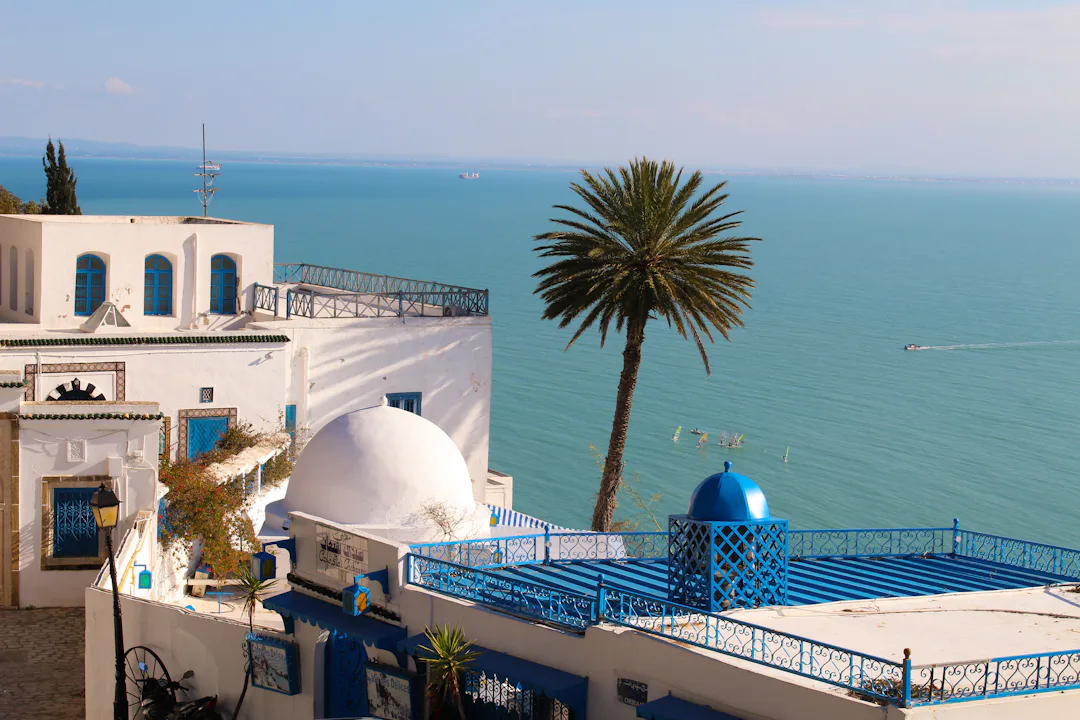
A week by the pool in Djerba or Hammamet, a road trip to the dunes around Douz, or the ruins of Carthage on a city break from Tunis: whatever brings you to Tunisia, your phone does a lot of the work, from maps and translations to messages home. A Tunisia eSIM gives you mobile data there without the surprise of a roaming bill, because you know the final price before you leave.
This guide covers whether your own plan works in Tunisia, the country's three mobile networks, what hotel Wi-Fi is really good for, signal in the desert and on the ferry, and how to set everything up before you fly. The eSIM plans for Tunisia are in the Visomu app.
Does your own plan work in Tunisia?
It usually works, but rarely for free. Tunisia is not in the EU or the EEA, so the EU's “roam like at home” rules don't apply. Operators in Europe normally put Tunisia in a more expensive roaming zone, with a daily charge or per-megabyte rates. UK plans treat it as a destination outside Europe, and plans from North or Latin America charge their international roaming rates.
Look up Tunisia in your operator's app or roaming page before you go, and check both data and calls. Our guide to what a week abroad costs with roaming or an eSIM shows how to compare the two for your own trip.
Tunisie Telecom, Ooredoo and Orange
Tunisia has three mobile network operators: the state-owned Tunisie Telecom, Ooredoo Tunisie and Orange Tunisie. All three run national 4G networks, and figures from the International Telecommunication Union reported in 2025 put 4G coverage at around 96% of the population. The three operators launched 5G commercially in February 2025; as of November 2026 it is still being rolled out, so 4G is what you'll be on most of the time. A travel eSIM connects through a local network, and which one depends on the plan.
Resort hotels: what Wi-Fi is good for
Most visitors stay in the big resorts of Djerba, Hammamet, Sousse, Port El Kantaoui and Monastir, and nearly every hotel advertises Wi-Fi. How well it works varies a lot. It's often strongest in the lobby and weaker in rooms further from the main building, by the pool or on the beach, and it can slow down in the evening when everyone is online at once.
Hotel Wi-Fi is fine for messages and browsing. It's no help on an excursion to El Djem, in a taxi to the medina of Sousse or Hammamet, or when you need to find your guide at a meeting point. That's when mobile data earns its keep, and it's also what lets you send a video call home without waiting for the lobby.
Into the Sahara: Douz, Tozeur and the salt lake
A desert trip is one of the highlights of Tunisia, often as a two-day tour from the coast to Matmata, Douz, the Chott el Djerid salt lake and Tozeur. The towns and the main roads between them generally have mobile coverage. Out in the dunes, at desert camps and on stretches of road between oases, the signal can be weak or disappear altogether.
- Download offline maps of the south before you leave the coast.
- Save your tour operator's details and your hotel's address on the phone itself.
- Heat drains batteries quickly: keep the phone out of direct sun and carry a power bank.
- Check your government's travel advice before you go. The UK's, for example, advises against travel to some areas near the borders with Libya and Algeria.
Tunis, Carthage and Sidi Bou Saïd
In and around the capital, coverage is dense on all three networks. The TGM light railway runs from Tunis to La Goulette, Carthage, Sidi Bou Saïd and La Marsa, which makes a day of ruins, cafés and blue-and-white streets easy to put together with a map app. Carthage's sites are spread out, so having data to check where the next one is, and how to get back to a station, saves a lot of walking in the sun.
For trips between towns, many Tunisians use the louage, a shared minibus that leaves when it's full. There is no app for it: you go to the louage station and look for the sign with your destination, so it helps to have the station on your map and a translation app ready.
Arriving by ferry from Italy or France
Ferries to La Goulette, the port of Tunis, sail from Genoa, Civitavecchia, Palermo and Marseille. Once you're away from the coast, your phone can connect to the ship's onboard mobile network, which works over satellite. That is not covered by EU roaming rules, and your home operator can charge high rates for it, even for apps refreshing in the background.
Turn off data roaming on your home SIM, or switch on flight mode, before the ship leaves port. Use the ship's Wi-Fi if you need to, and switch mobile data to your eSIM once you're back in range of a Tunisian network.
A Tunisian SIM or a Tunisia eSIM?
You can buy a prepaid SIM at the airport or in operator shops, but you'll need to show your passport to register it. If you put a Tunisian SIM in a phone bought abroad, Tunisian rules can also require the phone itself to be registered on the official Sajalni platform within a set period, or it may be blocked on Tunisian networks. That mostly matters for longer stays, but it's worth knowing before you buy.
A travel eSIM is bought and installed in the app before you leave. There's no queue on arrival and your own SIM stays in the phone, so your number keeps working for calls and texts.
Visiting family in Tunisia
If you're going back to see family, often for several weeks in summer, you'll probably want to keep your own number reachable: for WhatsApp, for relatives at home and for the codes your bank sends by text. Keep your home SIM as a second line for calls and texts, and use the eSIM for data. Where a plan allows it, you can top up in the app if your stay runs longer than planned; the app tells you before you buy whether a plan can be topped up. See how to keep WhatsApp and your own number on a travel eSIM.
Choosing a Tunisia eSIM plan
Think about how you'll spend the trip rather than only how long it is. A beach week where you're mostly on hotel Wi-Fi needs far less than a fortnight of touring, posting photos from the desert and navigating every day. Sharing your connection with a laptop, or streaming video away from the hotel, uses by far the most. Check the usage counter in the app after a day or two; the app tells you when data runs low and when the plan ends soon.
Every price in the app is the final price, VAT included, and you pay by card or Google Pay. If Tunisia is one stop on a longer trip around North Africa, our Morocco eSIM guide covers the next country along.
Setting up before you fly
Your plan's validity starts when the eSIM first connects to a network in Tunisia, so installing it at home costs you no days. Check first that your phone supports eSIM and isn't locked to your operator.
- Install the eSIM a few days before you leave, on your home Wi-Fi, and before its install deadline: the app shows a countdown and sends reminders.
- Label the line, for example “Tunisia”, and keep your home SIM as the default line for calls and texts.
- Turn off data roaming on your home SIM before you board, plane or ferry.
- On arrival, set mobile data to the eSIM. If the app's instructions tell you to, turn on data roaming for the eSIM line.
The eSIM is for data only and has no Tunisian phone number; calling and messaging apps work over its data as usual. If something isn't working, use “Mail us” in the app and we'll reply by e-mail.
Frequently asked
Is Tunisia covered by EU roaming?
No. Tunisia is outside the EU and the EEA, so roam like at home doesn't apply. Most European operators charge for Tunisia as a country outside Europe, so check your own plan's rates before you travel.
Which mobile networks are there in Tunisia?
There are three: Tunisie Telecom, Ooredoo Tunisie and Orange Tunisie. All run national 4G networks, and all three launched 5G in February 2025, which was still being rolled out as of November 2026.
Will I have signal in the Sahara?
In towns such as Douz and Tozeur and on the main roads, generally yes. In the dunes, at desert camps and between oases it can be weak or absent. Download offline maps before you head south and carry a power bank.
Does my phone connect to a network on the ferry to Tunis?
Out at sea it can connect to the ship's satellite network, which EU roaming rules don't cover and which can be expensive. Turn off data roaming or switch on flight mode before departure, and switch to your eSIM once you reach Tunisian coverage.
Do I need a passport for a Tunisia eSIM?
Not to buy a travel eSIM in the Visomu app. A Tunisian prepaid SIM bought locally has to be registered with your passport, and a phone from abroad used with it may also need registering on the Sajalni platform.